Review: Christmas Highland Cow Mug Sublimation for Embroidery
As a designer who spends more time staring at stitch maps than most people care to admit, I approach every new machine embroidery design with a mix of excitement and skepticism. When I first pulled up the Christmas Highland Cow Mug Sublimation file on my screen, my initial reaction was one of genuine delight. There is something undeniably charming about the intersection of rustic farm animals and cozy holiday aesthetics. However, charm alone does not make a viable product for a craft business. The real question is whether this illustration translates well from a digital screen to a tangible, stitched finished product.
First Impressions and Visual Personality
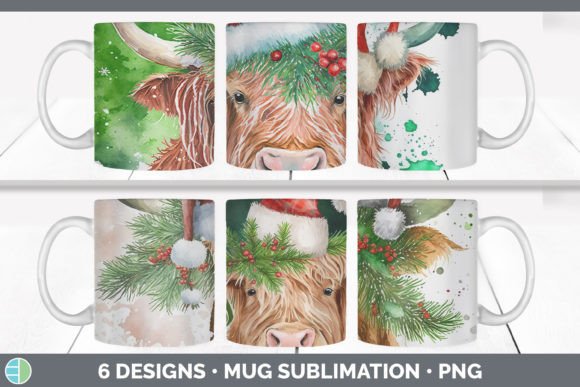
The mood of this design is instantly warm and inviting. It captures that specific niche of "highland cow" popularity that has taken the handmade market by storm, blending it seamlessly with traditional Christmas elements. Visually, the layout feels balanced, avoiding the clutter that often plagues holiday motifs. For an Etsy seller or boutique owner, this visual personality is gold; it speaks directly to customers looking for whimsical yet sophisticated personalized gifts.
From a technical standpoint, the transition from a sublimation-style graphic to an embroidery file requires careful attention. Sublimation designs often rely on gradients and soft edges, which can be tricky to replicate with thread. In reviewing this specific asset within the Illustrations category, I noticed the lines are clean enough to suggest a thoughtful digitizing process. The shapes appear distinct, which is crucial for maintaining clarity once the needle hits the fabric. If the original artwork relies too heavily on subtle color shifts, we might need to simplify the thread colors to ensure the design pops without becoming muddy.
Real-World Application: The Holiday Tote Scenario
To truly test the viability of Christmas Highland Cow Mug Sublimation, I imagined a specific real-life scenario: preparing a run of custom tote bags for a local holiday market. Tote bags are a staple small shop product, but they present unique challenges due to their canvas texture and potential for movement during stitching.
In this context, the design shines as a central focal point. Imagine a natural cotton canvas bag with this highland cow motif stitched in rich greens, reds, and the characteristic browns of the cow's fur. The fill stitch areas would provide excellent coverage, hiding the weave of the canvas, while satin stitch outlines could define the mug and the animal's features with crisp precision. For a customer walking through a craft fair, this handmade product offers immediate visual appeal. It signals quality and thoughtfulness, two traits that drive buyer engagement.
Beyond totes, this design is equally suited for sweatshirt embroidery. A heather grey crewneck featuring this motif on the left chest or centered on the front would make a perfect holiday gift. The scale of the design seems appropriate for apparel, provided you verify the dimensions against your intended placement. It avoids being too large and overwhelming or too small and lost in the fabric texture.
Navigating Fabric and Hoop Constraints
While the aesthetic is strong, practical execution requires caution. Not every surface is ready for this design. If you are working with stretchy fabrics like jersey knits for baby embroidery projects, the density of the stitches becomes a critical factor. High stitch density can cause puckering or restrict the stretch of the garment, making it uncomfortable for a child to wear. In such cases, testing on scrap fabric is non-negotiable.
Similarly, curved surfaces like caps demand a different approach. While a patch version of this design could work beautifully on a dad hat, stitching it directly onto a structured cap requires a sturdy stabilizer and potentially a adjustment in underlay settings to prevent distortion. The "mug" element, with its likely circular or oval shape, must remain true; if it distorts into an egg shape on a curved brim, the professional look is lost.
For those considering dark fabrics, remember that sublimation-inspired designs sometimes assume a white background. You may need to manually add a background fill or adjust the thread colors to ensure contrast. A dark navy sweatshirt might swallow the darker tones of the highland cow unless you introduce lighter outlining or highlights. Always compare light and dark fabric backgrounds before committing to a full production run.
Enhancing Brand Value and Customer Trust
Using a well-chosen design like Christmas Highland Cow Mug Sublimation directly impacts your brand consistency. When customers see a cohesive, high-quality embroidery project, their trust in your craft business grows. It shows that you curate your design assets with care rather than grabbing generic clipart. This attention to detail elevates the perceived value of the item, allowing you to price your custom apparel or home decor items more competitively.
Furthermore, the versatility of this design supports various revenue streams. It works as a standalone embroidered patch that can be ironed on later, offering a low-risk option for customers unsure about permanent customization. It also serves as an excellent subject for printable mockups in your online store, helping digital buyers visualize the final result before purchasing the digital embroidery file itself.
Practical Notes for the Professional Maker
Before launching this design into your workflow, here are a few essential checkpoints:
- Test First: Always stitch a sample on the exact fabric type you intend to sell. What looks good on quilting cotton may behave differently on fleece.
- Check Density: Inspect the stitch count relative to the size. If the design feels too dense, consider requesting a lighter version from the digitizer or adjusting settings if your software allows.
- Verify Licensing: Crucially, confirm the license terms. Just because a file is available doesn't automatically grant rights for commercial embroidery use. Ensure you are cleared to sell finished items or digital copies.
- Hoop Size: Confirm the required hoop size fits your machine's capabilities. Some larger designs require jumbo hoops that not all home machines possess.
- Detail Inspection: Zoom in on tiny lettering or fine details. If the text is smaller than 0.25 inches, it may not stitch out clearly and could benefit from removal or enlargement.
In conclusion, Christmas Highland Cow Mug Sublimation holds significant promise for the holiday season. Its blend of trending subject matter and festive spirit makes it a strong contender for tote bag design, apron embellishment, and nursery decor. However, its success relies entirely on the maker's ability to adapt the digital file to the physical realities of thread and fabric. By respecting the limitations of your materials and verifying the technical specs, you can turn this charming illustration into a best-selling finished product that delights customers and strengthens your brand.