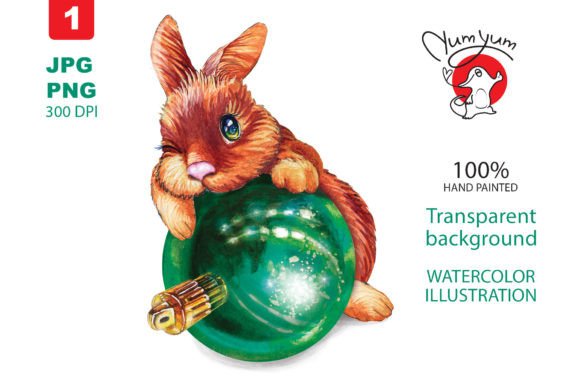
Bunny with a Christmas Ball: A Designer's Review
When I first pulled up the Bunny with a Christmas Ball file on my screen, my immediate reaction was one of quiet appreciation for its simplicity. In the world of Illustrations for embroidery, there is often a temptation to overcomplicate holiday motifs with excessive detail, but this design strikes a balance that feels both modern and timeless. As a designer who spends hours tweaking stitch paths and worrying about pull compensation, I look for files that respect the medium. This isn't just a cute graphic; it is a functional machine embroidery design that seems ready for the rigors of actual production.
First Impressions and Visual Personality
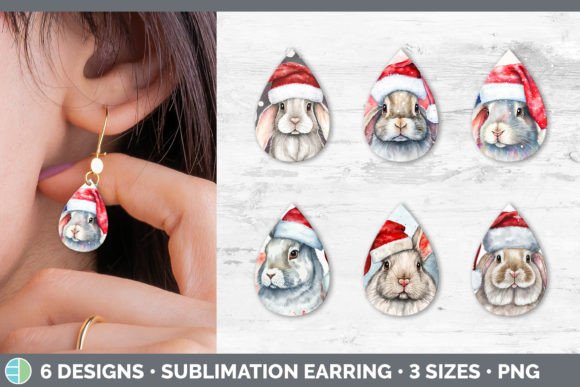
The mood created by Bunny with a Christmas Ball is undeniably festive without being overwhelming. The composition centers on a charming rabbit interacting with a holiday ornament, creating a narrative snapshot rather than a static icon. Visually, the layout feels open and airy. There is a distinct lack of clutter, which is crucial when you are working with thread colors that need to pop against various backgrounds. The shape language is soft and rounded, avoiding sharp angles that can sometimes cause thread breaks or look jagged on lower-end machines.
What stands out most is the potential versatility. While many holiday designs scream "December only," the inclusion of the bunny gives this piece a whimsical quality that could arguably stretch into early spring or general nursery decor if the color palette is adjusted. However, in its intended context, it serves as a perfect anchor for holiday embroidery projects. The level of detail suggests a thoughtful mix of satin stitch for the outlines and textural elements, likely paired with fill stitch areas to give the bunny and ball some weight and presence.
Real-World Application: The Holiday Tote Scenario
To truly evaluate an embroidery file, I have to imagine it stitched out on a real product. Let's say I am preparing a run of custom tote bags for a local boutique's Christmas market. These bags are made of a medium-weight canvas, a fabric that can be unforgiving if the stitch density is too high. Bunny with a Christmas Ball feels like it would shine here. The design's scale appears appropriate for the front panel of a standard tote, offering enough visual interest to draw a customer in without dominating the entire surface area.
I can already picture the finished product: a cream-colored bag with the bunny stitched in soft greys and whites, holding a vibrant red or gold Christmas ball. The contrast would be striking. For an Etsy seller or small shop product creator, this kind of clear, readable imagery is gold. It translates well in photos, which is essential for online listings. Whether used as a printable mockup for digital previews or stitched as a handmade product, the design maintains its integrity. It doesn't rely on tiny, lost details that disappear in a thumbnail image.
Performance on Different Fabrics and Garments
Beyond tote bags, where does this design fit? I see strong potential for sweatshirt embroidery. The cozy aesthetic of a bunny pairs naturally with fleece or French terry. However, this is where a designer must exercise caution. If the stitch density in the fill areas of the Christmas ball is too high, it could cause the fabric to pucker or the garment to feel stiff. Before committing to a client order, I would absolutely test this on a scrap piece of the same sweatshirt material.
For baby embroidery, such as on a onesie or a receiving blanket, the soft lines of the bunny are ideal. Babies have sensitive skin, so ensuring there are no rough, dense stitch clusters on the backside is vital. Using a high-quality cut-away stabilizer would be my recommendation here to support the fabric without adding unnecessary bulk. Conversely, if you are considering this for a cap, the curved surface presents a challenge. The roundness of the Christmas ball might distort slightly if not digitized specifically for caps, so I would advise checking the specific hoop compatibility and perhaps resizing the design to ensure it sits flat on the front panel.
Critical Considerations for Commercial Use
As a professional, I always approach new assets with a critical eye toward longevity and washability. A finished product needs to survive the laundry cycle, especially if it is a kitchen towel or apron. The connection points between the bunny and the ball, and any internal details within the ornament, need to be robust. If these are rendered in fine running stitch or very narrow satin columns, they might fray after several washes.
This brings us to the importance of testing. Never assume a digital preview matches the physical reality. I recommend stitching Bunny with a Christmas Ball on both light and dark fabrics before selling it as a custom apparel option. On dark fabrics, you may need to adjust the underlay or add a backing layer to prevent the fabric color from showing through the lighter threads of the bunny. Additionally, if you plan to sell this as part of a line of embroidered patch products, ensure the edges are defined clearly enough to be cut cleanly, whether by hand or machine.
Enhancing Brand Value and Customer Trust
Ultimately, the designs we choose reflect on our brand. Using a high-quality, well-balanced motif like Bunny with a Christmas Ball signals professionalism. It shows customers that you care about the aesthetics of your craft business. A sloppy or poorly proportioned design can undermine trust, but a cohesive, charming illustration enhances the perceived value of the item. Whether it is a personalized gift for a family member or a piece of inventory for a holiday collection, the emotional resonance of the design matters.
For creative entrepreneurs selling design assets, this type of illustration offers great flexibility. It can be part of a larger collection of holiday animals or stand alone as a featured item. The key is presentation. When marketing this design, highlight its adaptability. Show it on a pillow cover, then on a child's t-shirt. Demonstrate its range. This helps buyers visualize the possibilities, increasing the likelihood of engagement and sales.
Final Verdict and Practical Notes
In summary, Bunny with a Christmas Ball is a promising addition to any designer's library. Its strength lies in its clean lines and adaptable theme. However, success depends on execution. Here are my final practical notes for anyone planning to use this file:
- Test First: Always stitch a sample on scrap fabric similar to your final material to check for puckering or registration issues.
- Check Density: Inspect the fill areas of the Christmas ball; if they feel too stiff, consider reducing the density in your software if the file allows editing.
- Stabilizer Matters: Match your stabilizer to the fabric. Water-soluble might work for towels, but cut-away is safer for stretchy knits.
- Thread Contrast: Experiment with thread colors. While traditional red and green work, metallic threads for the ball could add a premium touch.
- Licensing: Before selling finished items or digital versions, confirm the license terms provided with the download to ensure commercial use is permitted.
- Hoop Size: Verify the required hoop size against your machine's capabilities, especially if working with smaller hoops on cuffs or collars.
By approaching Bunny with a Christmas Ball with this level of scrutiny and care, you can transform a simple digital file into a standout embroidery project that delights customers and stands the test of time. It is a reminder that in our trade, the difference between good and great often lies in the preparation and the thoughtful application of our tools.